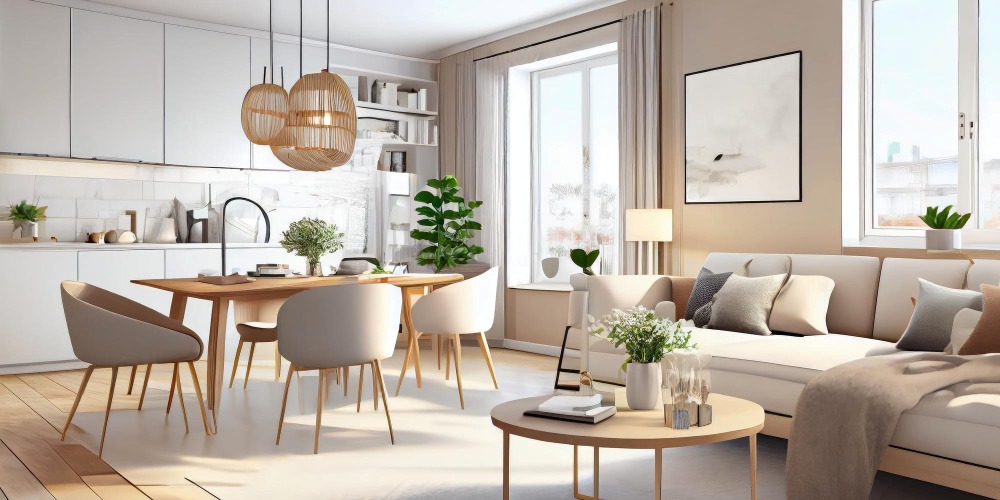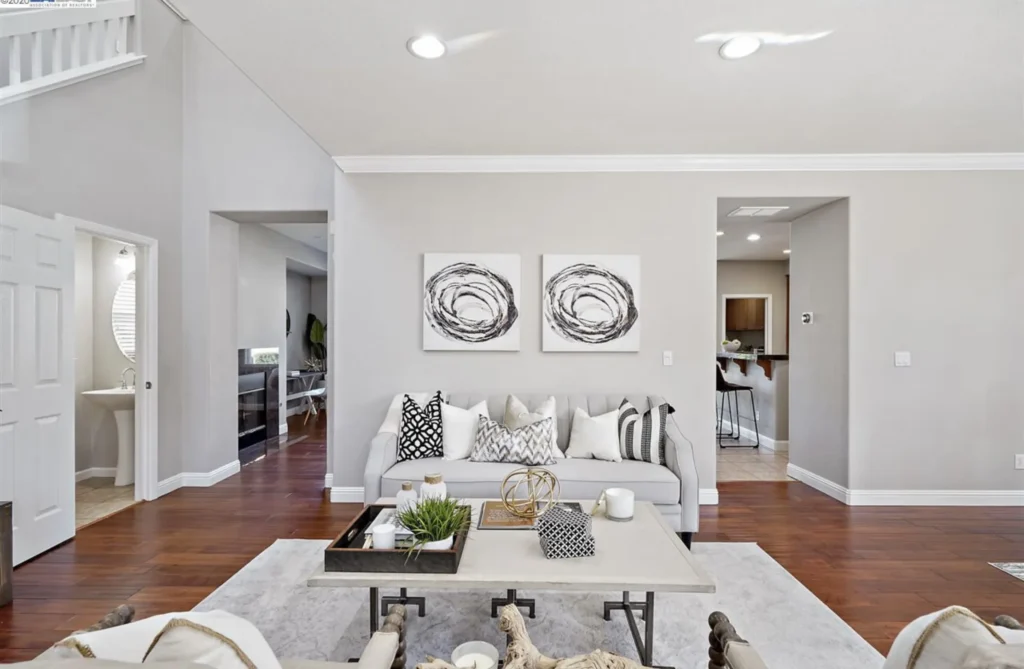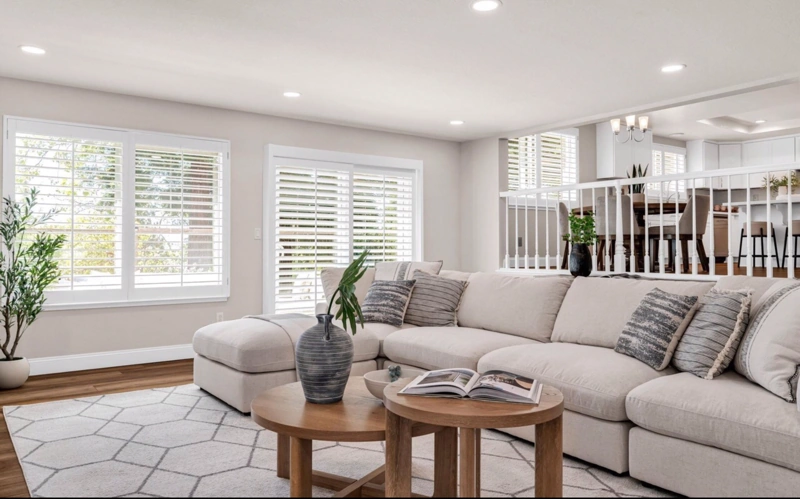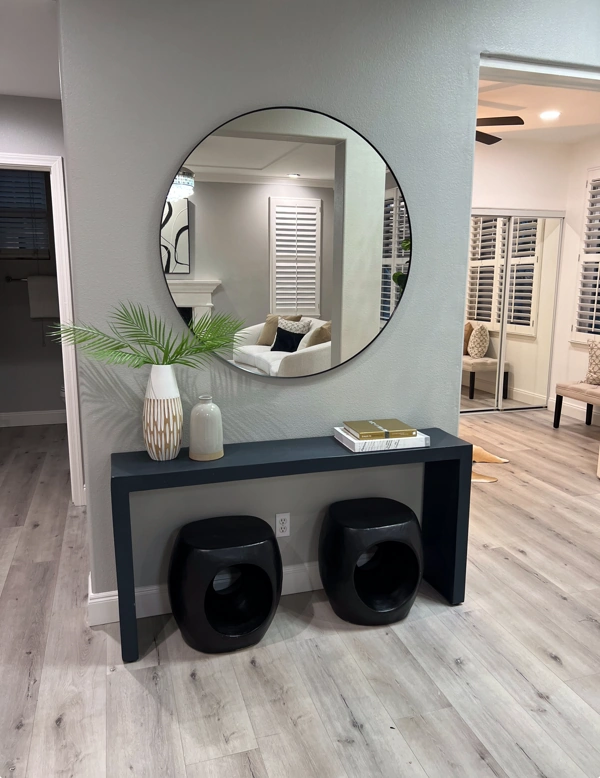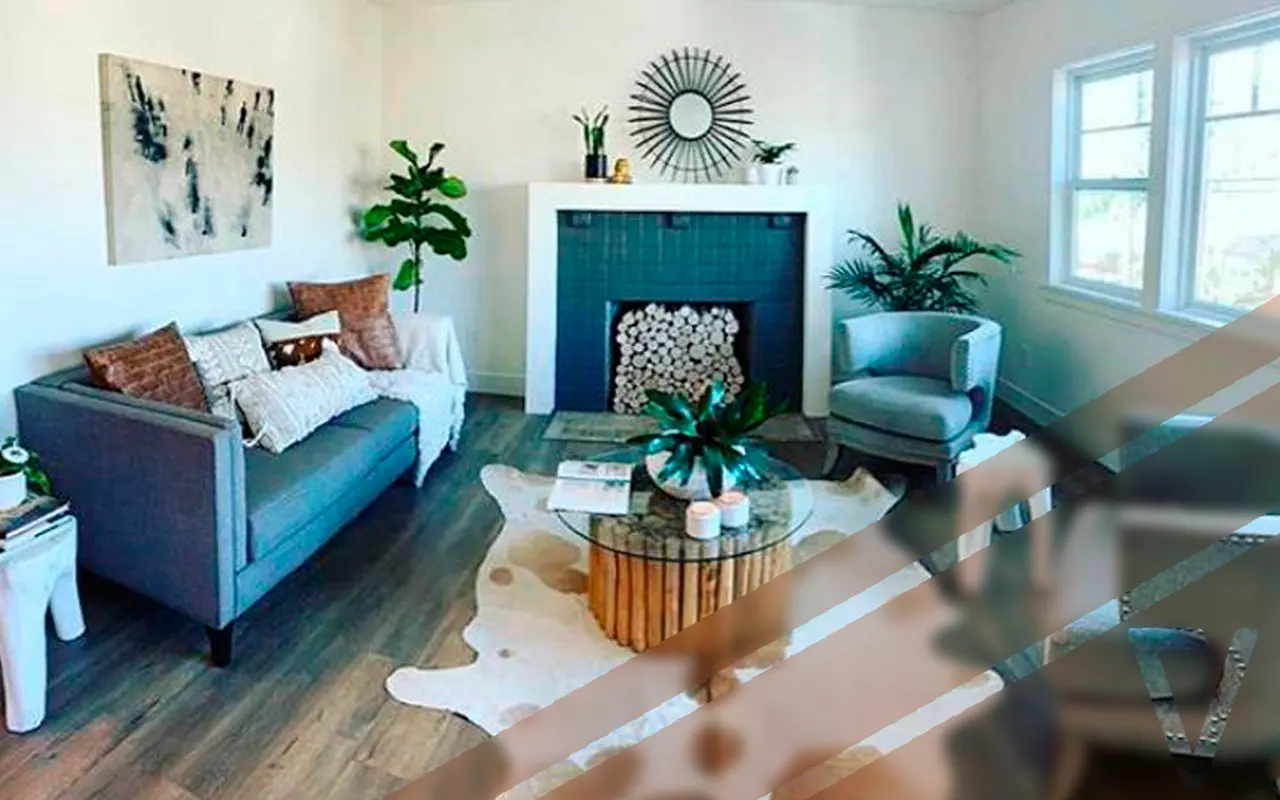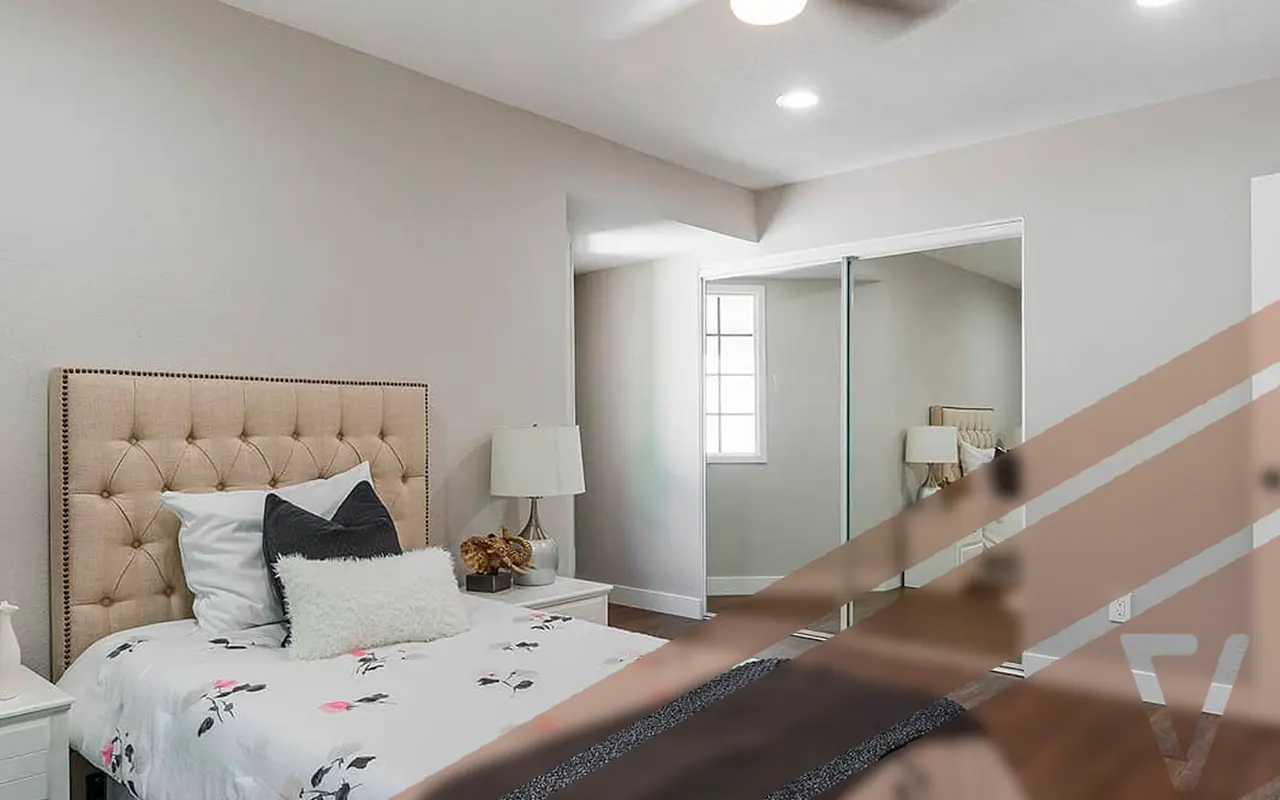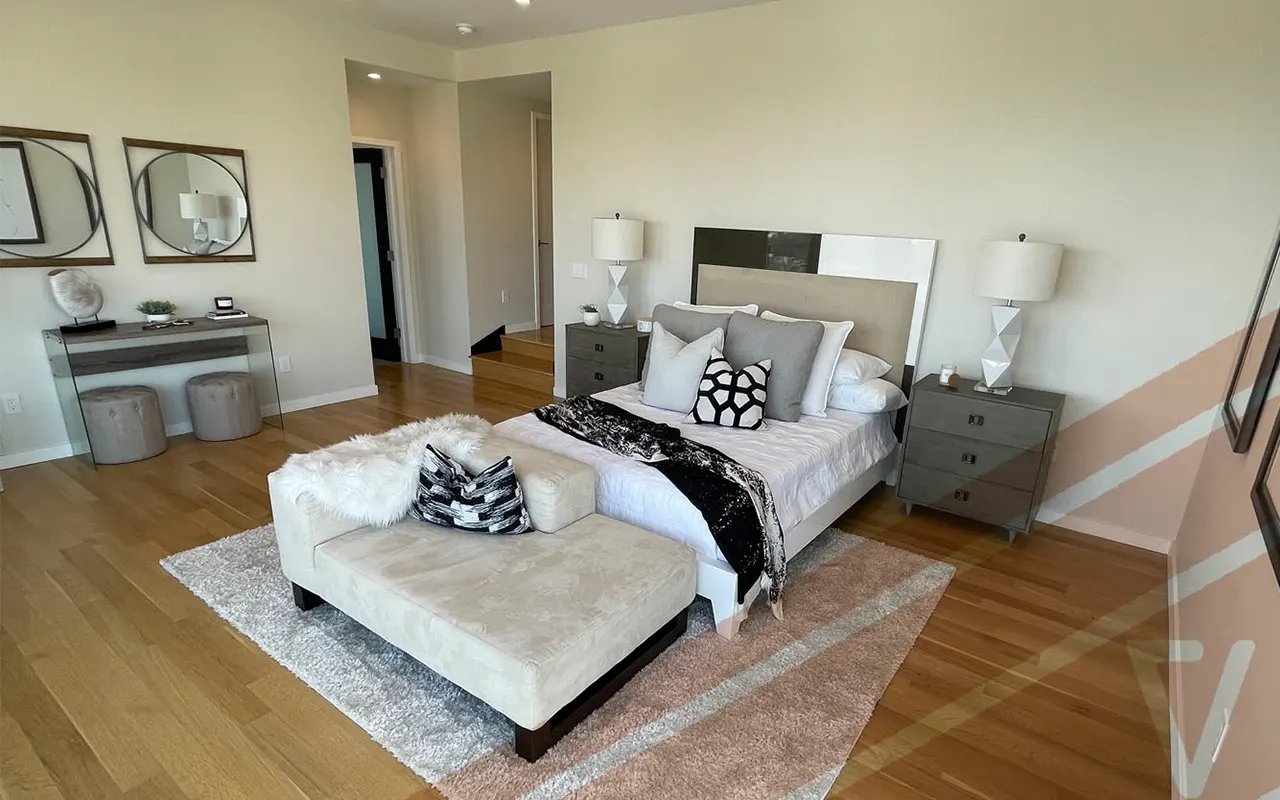

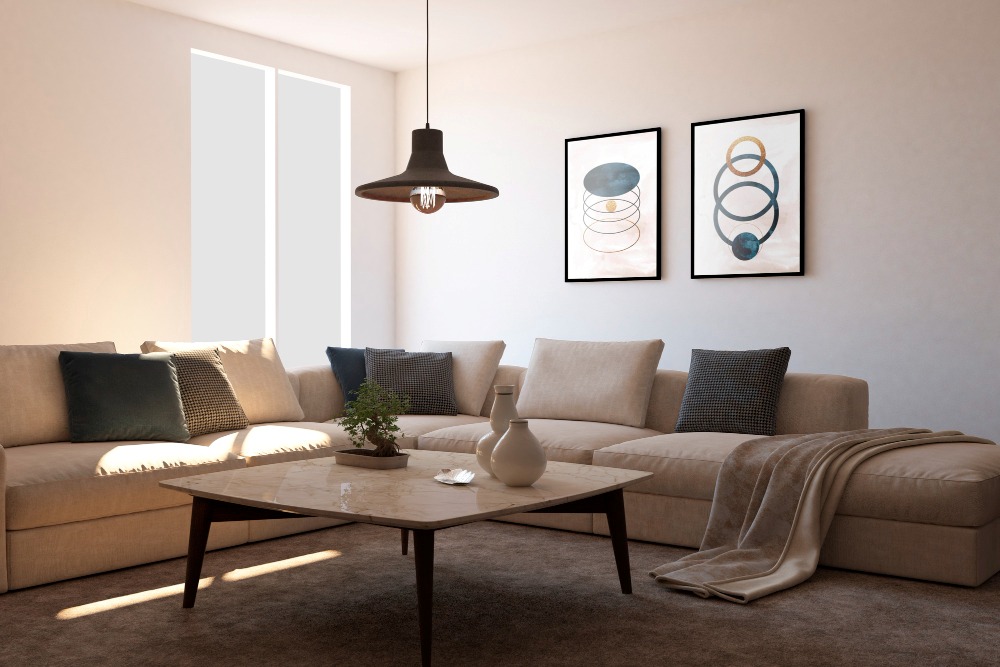
A small room can look even smaller when furniture is poorly scaled, the layout blocks sightlines, or the space is left so empty that buyers cannot judge what fits. Professional staging gives the room enough structure to explain its size without crowding it.
Good professional home staging uses proportion, placement, lighting, and restraint so buyers can see how the room functions and how much usable space it offers.
Start with furniture scale, not furniture quantity
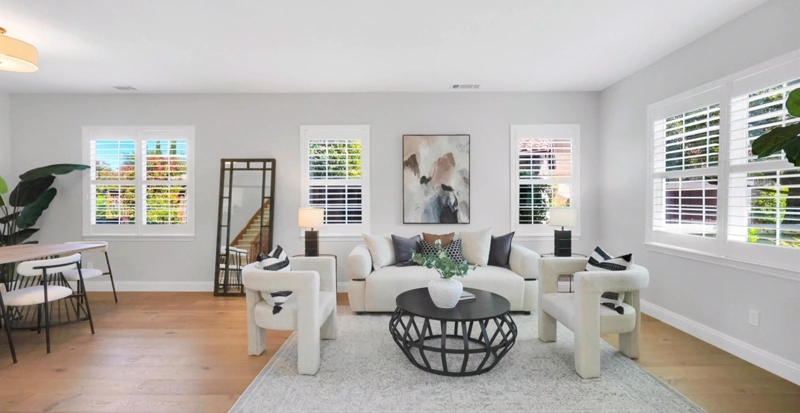
The size and shape of the furniture matter more than the number of pieces alone. A deep sofa with bulky arms can consume far more space than a slimmer sofa of similar length. Oversized coffee tables, heavy media consoles, and wide upholstered chairs can have the same effect.
Professional stagers look at the room’s dimensions before selecting pieces. In a small living room, one appropriately scaled sofa and a pair of lighter chairs may work better than several undersized pieces.
Going too small can also make a room feel awkward. Tiny furniture may leave buyers wondering whether normal-size pieces will fit. The aim is to show realistic use while keeping enough open floor area for the room to read clearly.
This is especially useful in vacant home staging, where furniture provides scale references an empty room lacks.
Keep the longest sightlines open
What buyers see from the doorway affects how large a room appears. Furniture that blocks a window, interrupts a path, or creates a wall across an open floor plan can shorten the visual field.
Stagers often position larger pieces away from the most open view into the room and keep circulation paths visible. In an open living and dining area, furniture can define separate functions without closing the space off. A sofa can establish the living zone while still allowing the eye to travel into the dining area.
In a small bedroom, the bed should anchor the room without blocking the clearest route through it.
Use furniture with less visual weight
Two pieces can occupy similar floor space and still feel very different. A chair with exposed legs allows more flooring to remain visible. A slim side table creates less visual bulk than a solid cabinet. An open-base coffee table can feel lighter than a blocky piece.
Stagers use these differences selectively. A room filled only with delicate furniture can look underfurnished. Larger pieces still need enough presence to make the room feel complete.
For East Bay home staging, furniture scale may vary between a compact condo, an older bungalow, and a larger single-family home. Architecture, windows, ceiling height, and circulation all affect what feels appropriate.
Rug size can change how the room reads
A rug that is too small can make a seating area feel compressed. When it sits only beneath the coffee table, it creates a small visual island in the center and separates the surrounding furniture.
A better-proportioned rug can connect the main seating pieces and make the usable area easier to understand. The correct size depends on the furniture arrangement and the amount of visible flooring around it.
Rugs can also define zones in open-plan spaces without adding a divider that makes the room feel tighter.
Protect natural light and dark corners
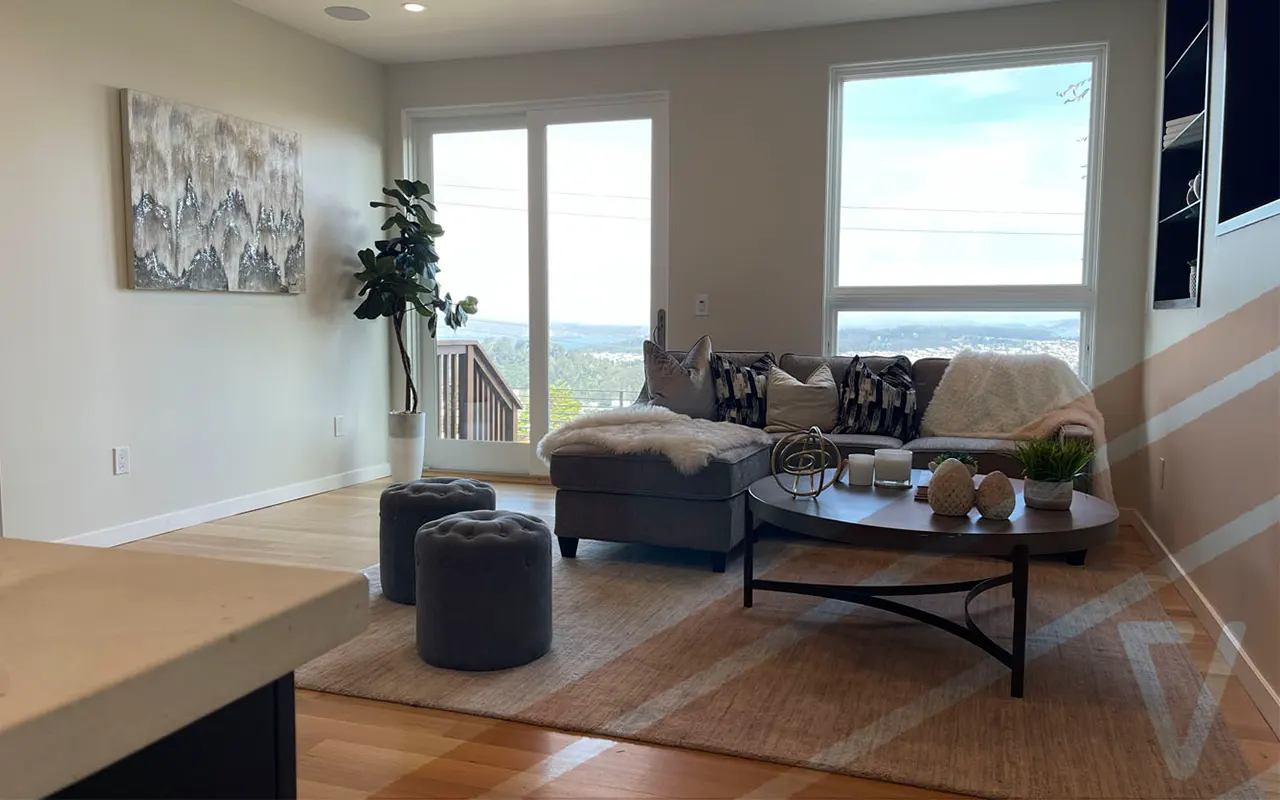
Furniture placed across a window can reduce daylight and make the opening appear narrower. Heavy window treatments can have a similar effect when they cover too much glass.
Stagers usually keep windows visually open and avoid tall pieces that compete with them. Lamps can help where corners remain dark, especially areas that disappear in listing photographs.
A bright window beside a dark interior can make parts of the space difficult to see in photos. Lighting should help buyers read the room’s depth and boundaries.
Reduce visual interruption without making the room bare
Clutter makes a small room harder to read, but removing every accessory can leave it unfinished.
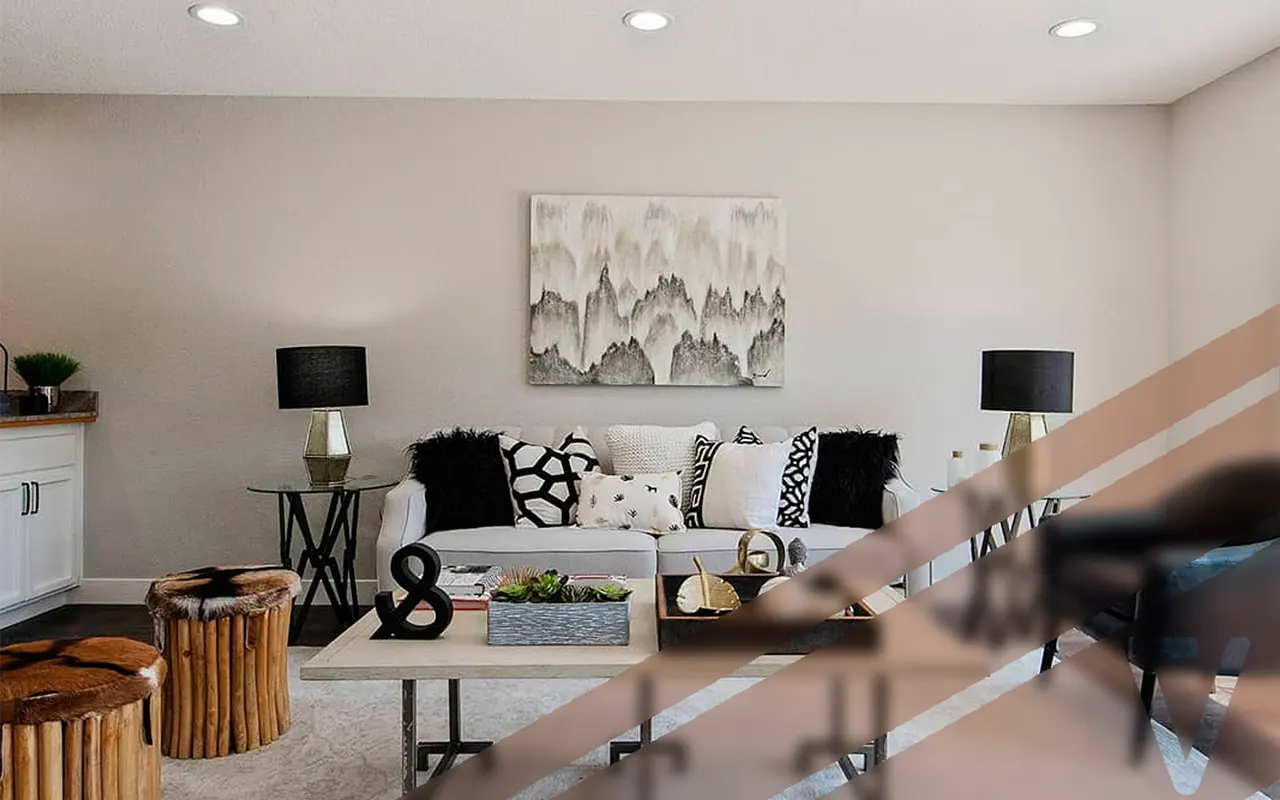
Professional stagers edit surfaces so the eye can move through the room easily. One larger piece of artwork may work better than a collection of small frames. A few well-scaled accessories can finish a console or coffee table without crowding it.
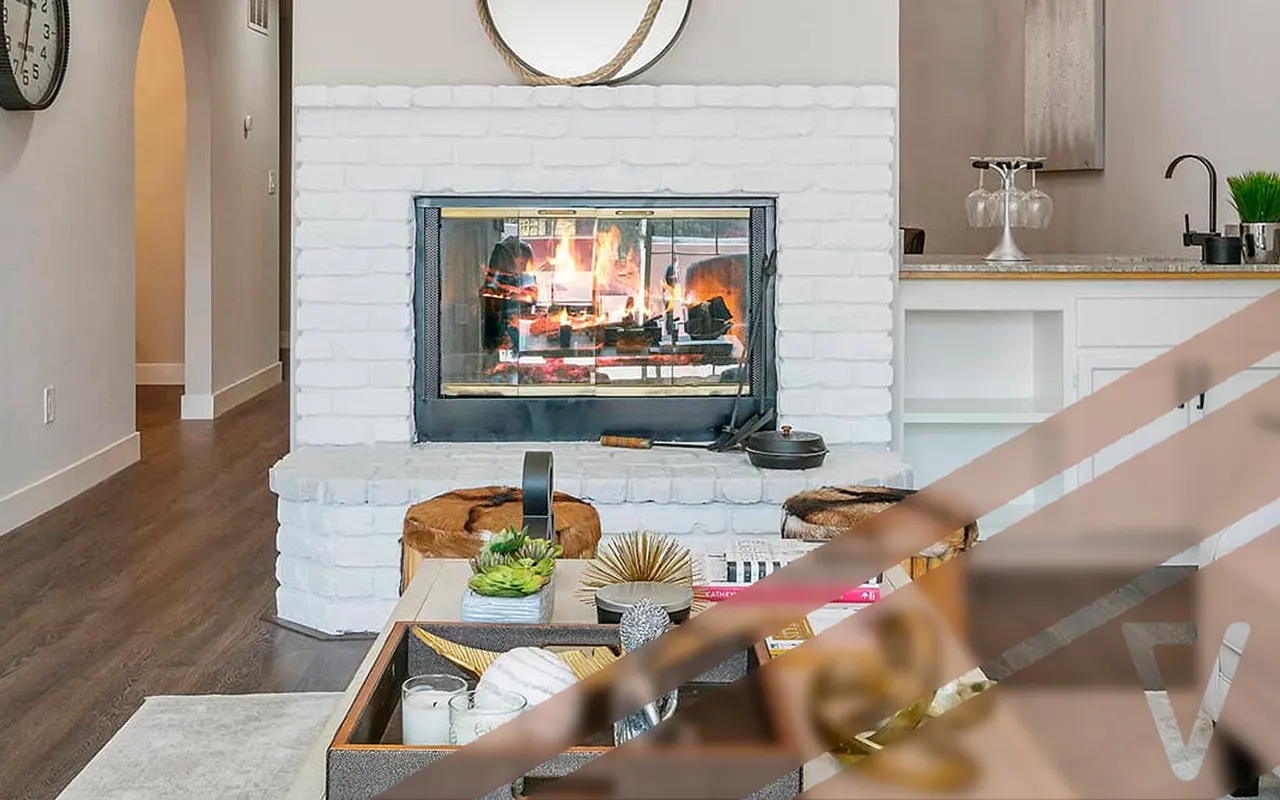
Too many unrelated colors, patterns, and materials can divide a compact room into smaller visual sections. The same restraint applies in Oakland home staging, where smaller rooms and older layouts often benefit from keeping architectural details visible.
Give small rooms a clear purpose
A compact room can feel less useful when its purpose is unclear.
In a small bedroom, staging should show that the bed fits comfortably and that there is still space to move around it. An awkward alcove may work better as a small desk area than as an empty corner. A narrow living room may need a clear conversation area rather than extra furniture added simply to fill space.
A clear purpose also makes listing photography easier to understand.
If you are preparing a Bay Area home for sale, Velvet Home Staging can select furniture and layouts around the proportions of the property. We stage vacant and occupied homes throughout the East Bay and wider Bay Area, with attention to architecture, light, and room flow. Contact Velvet Home Staging to discuss your staging timeline.
Frequently Asked Questions
Does removing all the furniture make a small room look bigger?
Not always. An empty room removes scale references, which can make it harder for buyers to judge how much furniture will fit. A few correctly sized pieces can make the dimensions easier to understand.
What type of furniture works best in a small room when staging?
Furniture should suit the room’s proportions. Slimmer profiles, exposed legs, and pieces with less visual bulk often work well, but the room still needs furniture large enough to look realistic and functional.
Can a rug make a small room look bigger?
Yes, when it is proportioned to the furniture arrangement. A rug that is too small can visually shrink the seating area, while a better-sized rug can connect the main pieces.
Should small bedrooms be staged or left empty?
Staging is often useful when buyers need to see what size bed fits and how much circulation remains. A simple bedroom setup can answer those questions more clearly than an empty room.
How do you stage a small living room for listing photos?
Use furniture that fits the room, keep main sightlines open, preserve natural light, reduce small-scale clutter, and leave enough visible floor area to show circulation. The setup should look complete without filling every available space.