
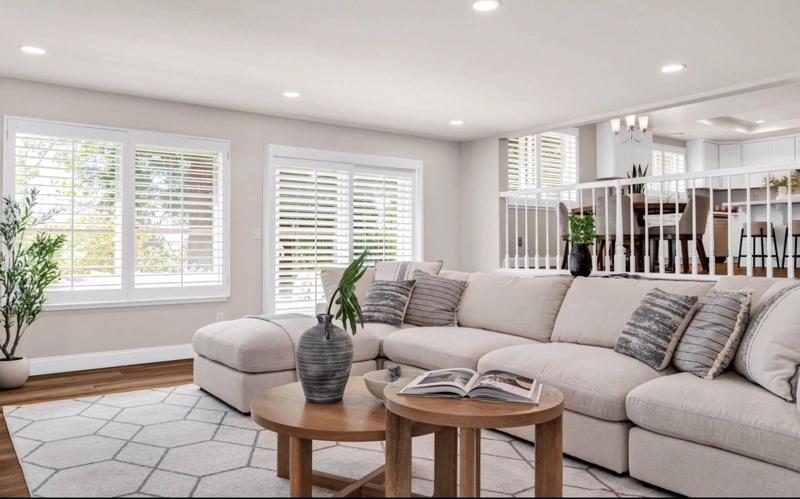
A vacant room leaves buyers to solve several questions on their own. Will a full-size dining table fit? Is the bedroom large enough for nightstands? Where does the living area end and the dining area begin?
Those questions are harder to answer from empty listing photographs. Without a sofa, bed, rug, or table for scale, even a generously sized room can feel smaller or less functional than it is.
Professional staging addresses that problem by placing appropriately scaled furniture where it provides useful context. For a vacant property, this may include furnishings, artwork, rugs, lighting, and accessories selected for the home rather than a collection of pieces added simply to fill space.
The result is a property buyers can read more easily, both online and during a showing.
Why Can an Empty Home Be Harder for Buyers to Visualize?
Empty rooms provide very few reference points.
A photograph of a vacant bedroom may not make it clear whether the space can comfortably hold a queen-size bed. In a large open-plan room, buyers may struggle to decide where they would place a dining table without crowding the seating area. An alcove or bonus room can feel like leftover square footage when its purpose is not obvious.
This matters because most buyers encounter the property online before they walk through it.
The National Association of REALTORS® 2025 Profile of Home Staging found that 83% of buyers’ agents said staging made it easier for buyers to visualize a property as their future home.
Staging does not change the floor plan. It makes the existing floor plan easier to understand.
How Furniture Helps a Vacant Home Stand Out
1. Furniture gives buyers a sense of scale
The right pieces show what fits without making a room feel crowded.
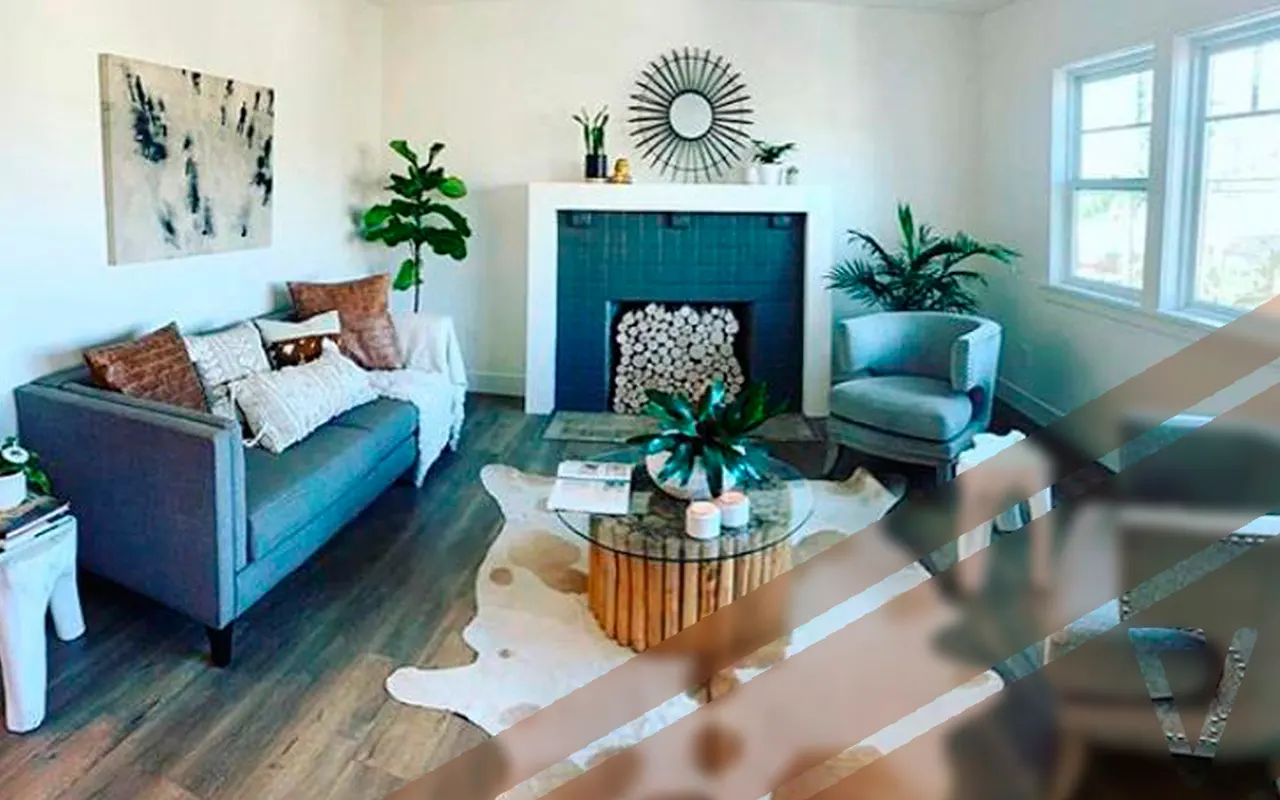
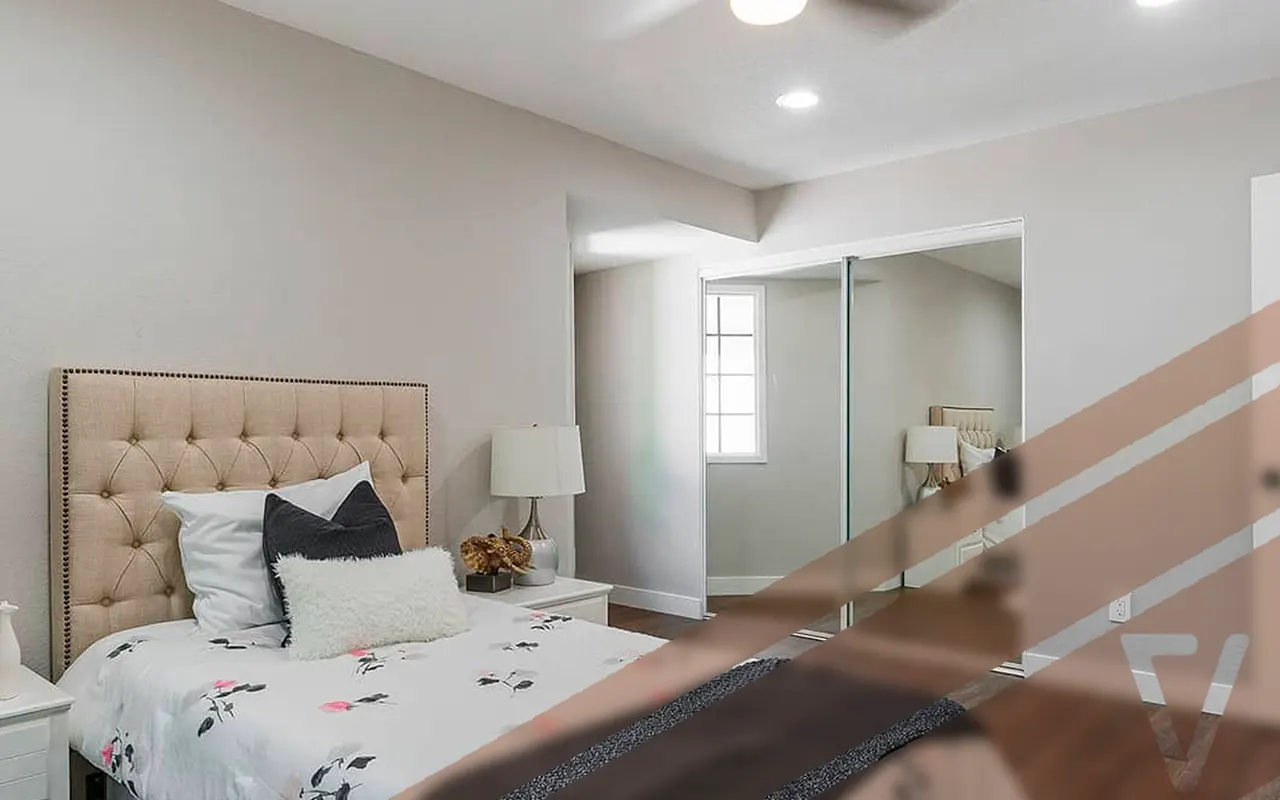
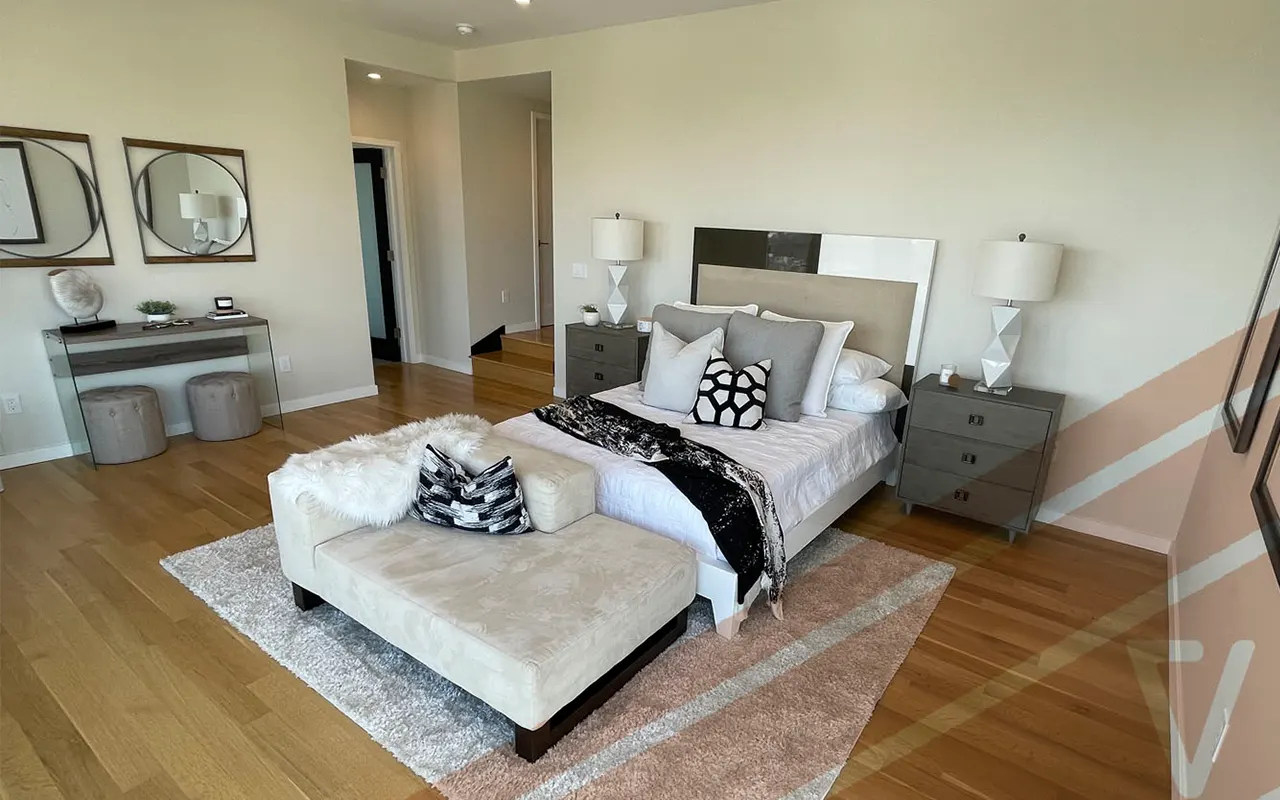
A sofa and two chairs can demonstrate that a living room supports conversation while preserving a clear path to the patio. A bed, nightstands, and rug can establish the usable width of a bedroom. In a dining area, the shape and placement of the table can show how people would move between the kitchen and living room.
Scale is especially important when arranging furniture for a compact condominium or a home with unusually large rooms. Pieces that are too bulky can make the first feel cramped; furniture that is too small can leave the second feeling sparse.
That is one reason vacant home staging in the Bay Area involves more judgment than placing a standard furniture package in every property.
3. Furniture can clarify an uncertain layout
Some floor plans make immediate sense when empty. Others do not.
An open space may need a rug and seating arrangement to define the living area without adding a physical divider. A small landing might work as a reading corner. A spare room could be presented as a guest bedroom, an office, or another useful space, depending on its dimensions and the rest of the home.
The aim is not to assign a purpose to every available corner. A room still needs breathing space. Good staging provides enough information for buyers to understand the layout while leaving room for their own ideas.
3. Furnished rooms tend to communicate better in photographs
Listing photographs compress a three-dimensional property into a series of flat images. Furniture adds depth and gives the eye somewhere to land.
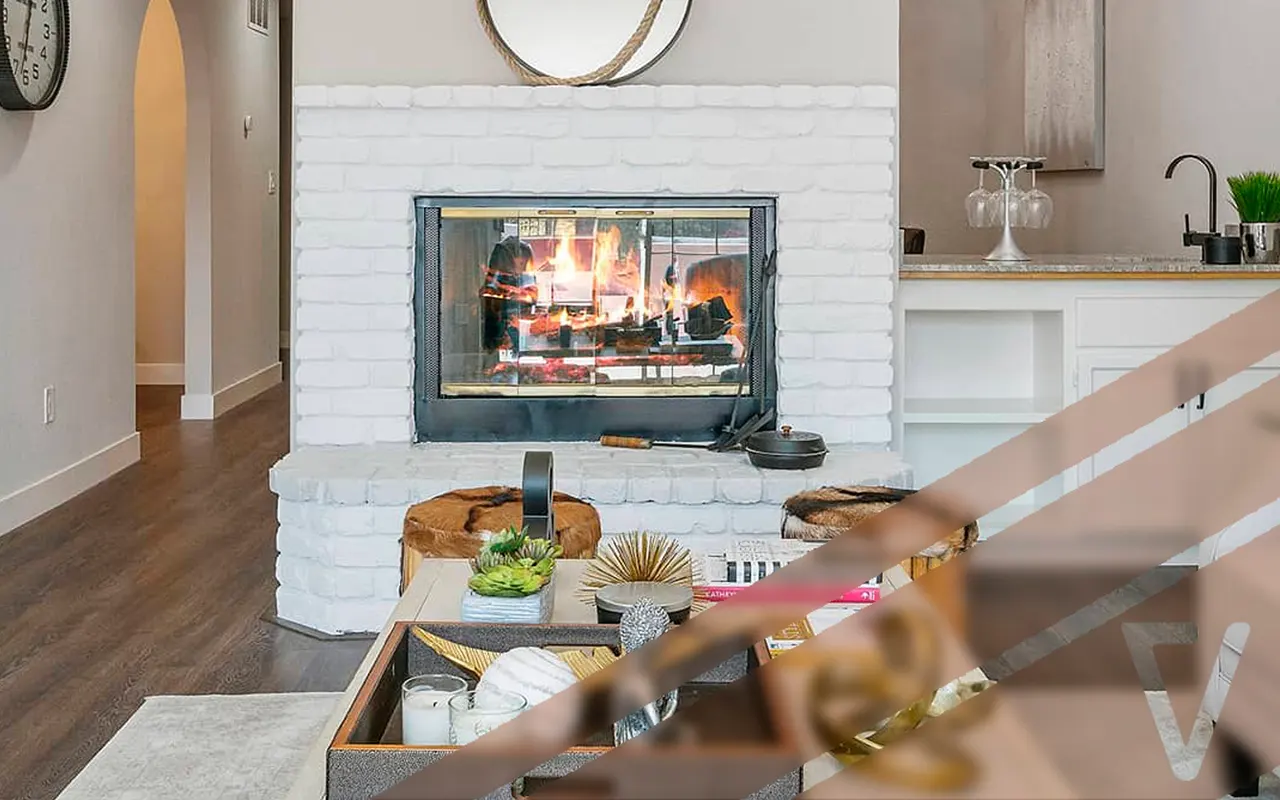
A seating arrangement can draw attention toward a fireplace. A dining table may help frame a view. A low-profile piece can preserve the sightline through a window rather than competing with it.
The home should remain the focus. Furniture, artwork, and accessories are there to support its proportions and architectural details.
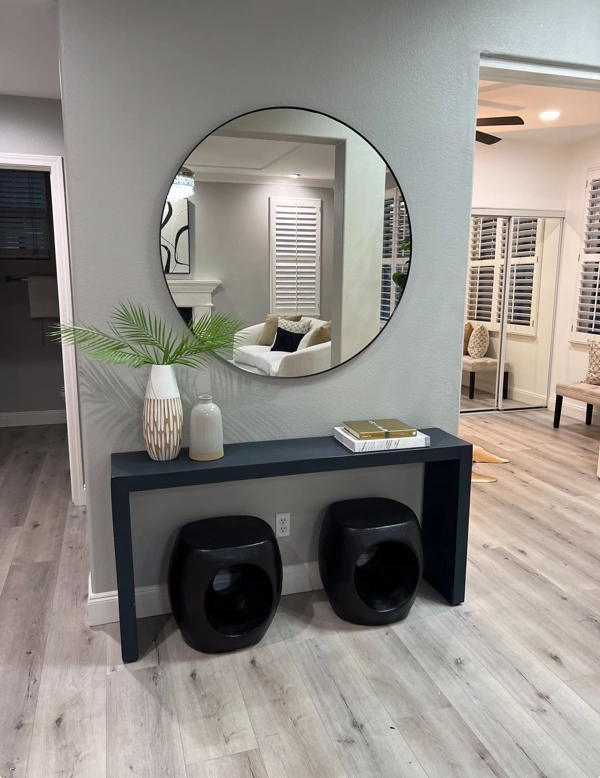
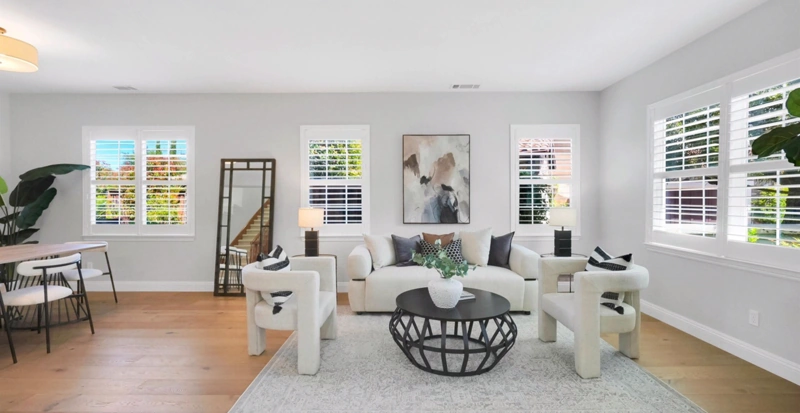
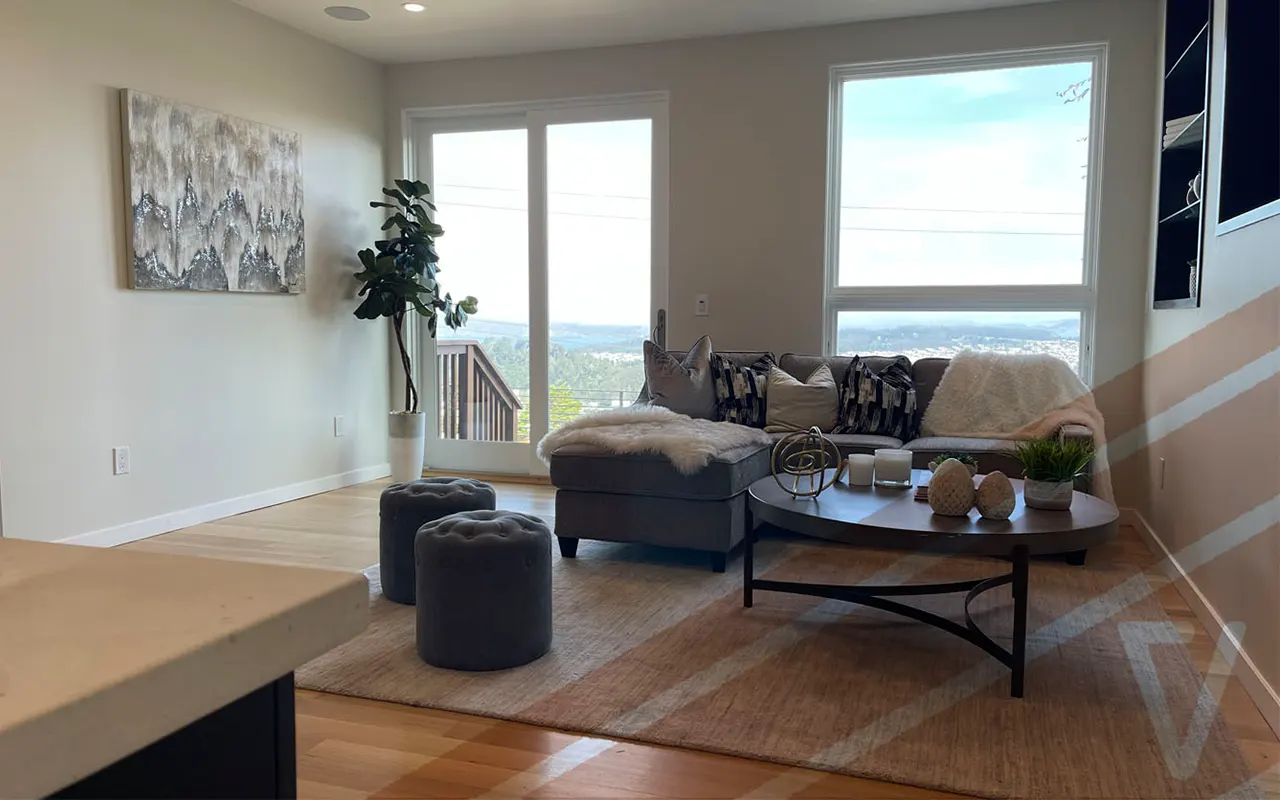
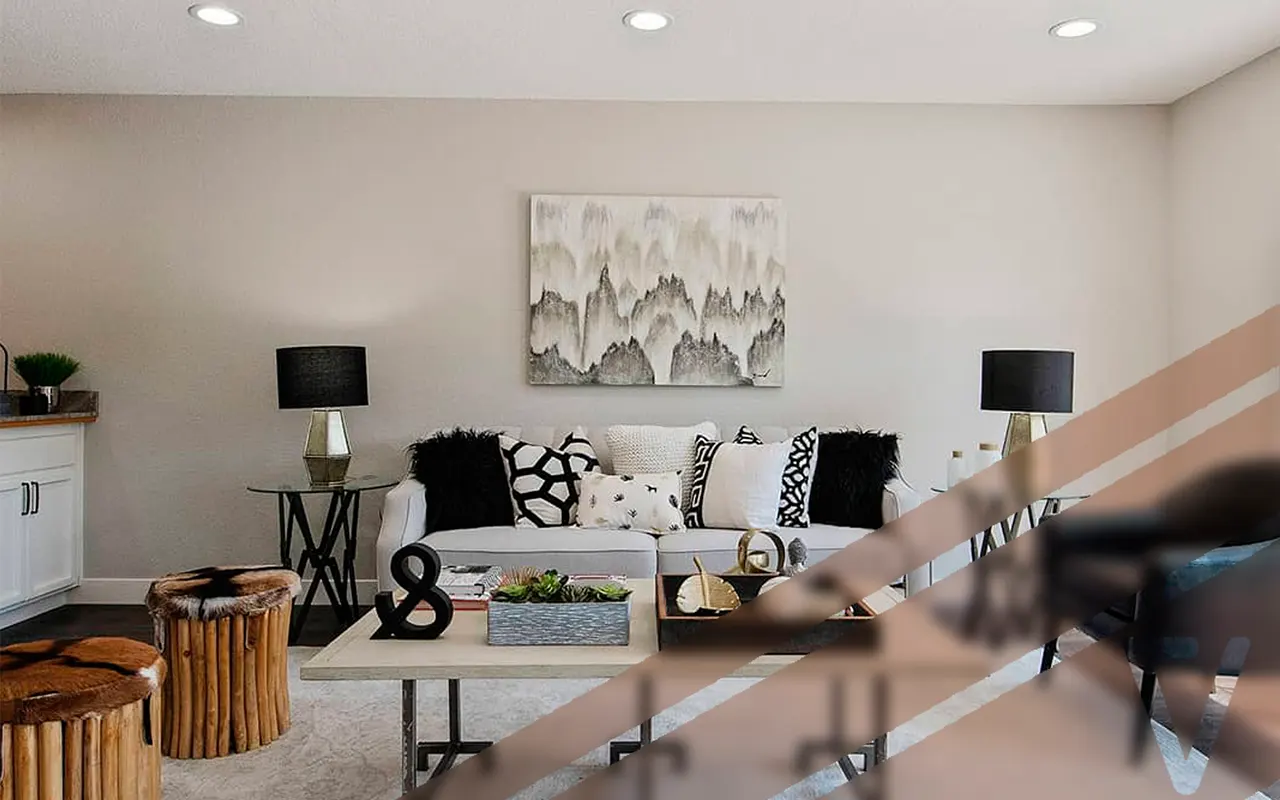
These before-and-after staging projects by our professional home staging company show how the placement of a few substantial pieces can change the way a room reads without hiding the property itself.
4. Physical staging carries the photographs into the showing
Virtual staging can illustrate one possible use for an empty room online. Physical staging by luxury home staging services does something different: buyers encounter the same furnished space when they arrive.
They can walk around the dining table, judge the distance between the sofa and fireplace, and see how one area connects with the next. That continuity between the listing and the showing can make the property easier to evaluate.
Which Rooms Should Be Furnished First?
Not every vacant home needs furniture in every room.
- When the scope is limited, the living room and primary bedroom often deserve priority because they help buyers understand how the home would feel in daily use.
- A dining area may also need attention when it shares space with the kitchen or living room.
- A room with an ambiguous purpose can be more important than a straightforward secondary bedroom.
- If buyers are likely to pause and wonder what an area is for, furnishing it may answer a question that an empty room cannot.
A partial home-staging furniture plan from property staging services should therefore be based on the specific property, not a fixed checklist. The home’s architecture, room proportions, listing price, and likely buyer all affect where staging will be most useful.
A Vacant Home Needs to Explain Itself
Buyers should not have to mentally measure every room or guess how an open floor plan works.
Well-chosen furnishings can provide those answers without covering up what makes the property appealing. They establish scale, define difficult spaces, and make the transition from listing photographs to an in-person showing feel more natural. Talk to the professional home stagers for assistance.
Frequently Asked Questions
How does furniture staging for a vacant home work?
The staging company reviews the property, chooses which rooms to furnish, selects furniture and accessories, and coordinates installation before photography or showings. The pieces are removed at the end of the agreed staging term unless an extension is arranged.
Does every room in a vacant home need to be staged?
No. The most useful rooms to furnish are usually the main living area, primary bedroom, dining space, and any room whose dimensions or purpose may be difficult to understand when empty.
How long can staging furniture stay in the property?
The period depends on the staging contract. Velvet advertises flexible terms that include 60-day staging contracts. Sellers should confirm the initial term, extension conditions, and removal schedule in their proposal.
Can some of the homeowner’s furniture be used?
Velvet states that it stages both occupied and vacant homes and works with existing furniture when appropriate in occupied properties. Whether personal pieces can be combined with rented staging inventory in a specific project should be confirmed during the consultation.
Is physical staging better than virtual staging?
The two serve different needs. Virtual staging can illustrate possible furniture arrangements in listing images, but the home remains empty during showings. Physical staging provides scale and room definition in both the photographs and the property itself.